Team Work
The work is still getting done. But it is taking more effort than it should.
For capable teams where trust, communication, and coordination are costing more than they should.
You can feel it.
In the meetings. In the silence. In the repeated conversations. In the tension people step around. In the amount of energy it now takes to move things forward.
The team may not be falling apart.
But something in the way people are speaking, listening, trusting, and coordinating action is creating drag.
And if it keeps going unnamed, that drag becomes normal.
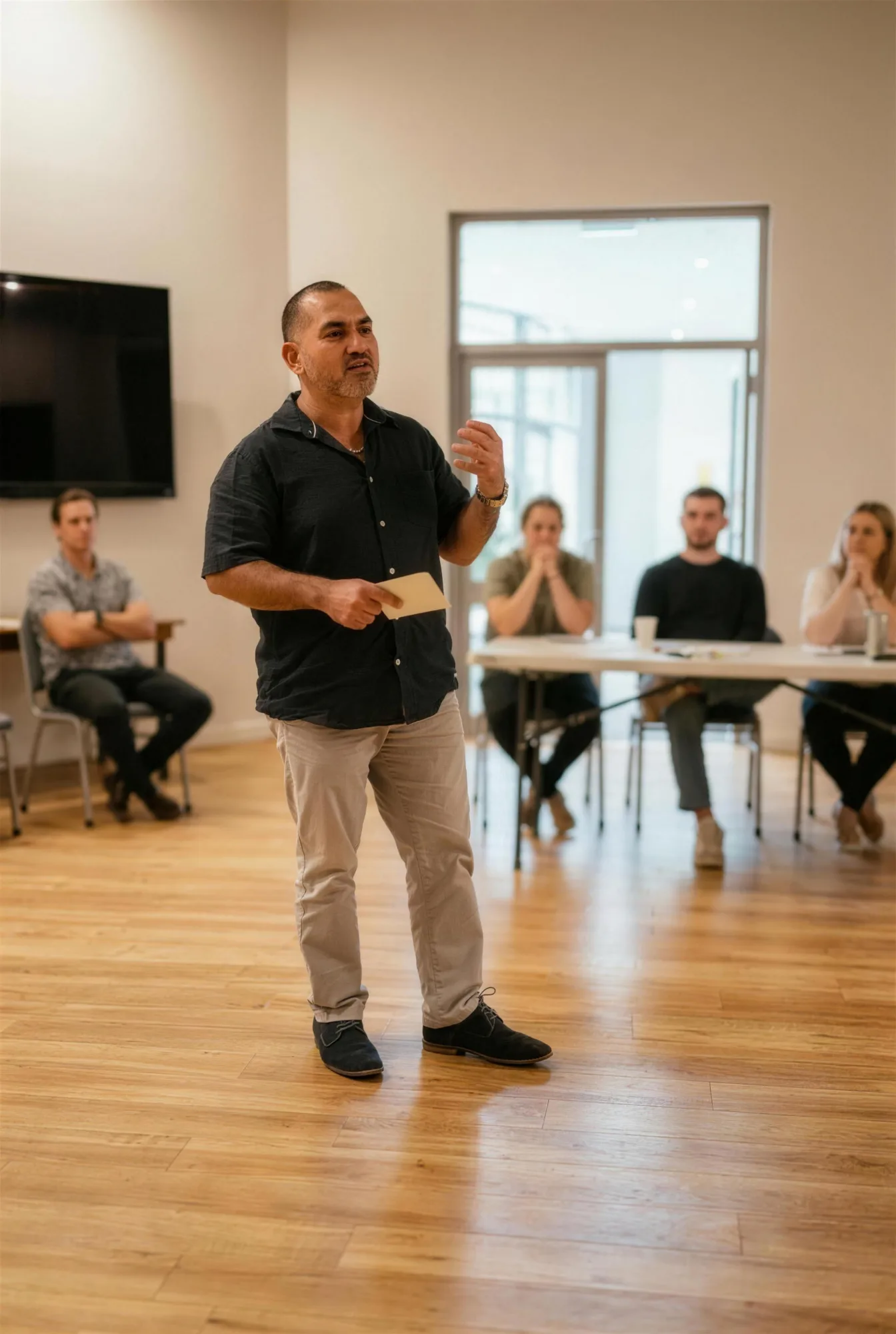
What starts to happen when trust thins
Trust rarely disappears all at once. It thins in missed conversations, loose promises, unclear standards, and the small moments people stop saying what needs to be said.
People become more careful.
They soften what needs to be said.
They talk around the issue instead of to the person involved.
They hold back feedback until it comes out sideways.
They make assumptions instead of requests.
They agree in the room, then act differently outside it.
They gossip.
Over time, the team learns how to function around the problem, and that might keep things moving for a while.
But it does not make the team stronger.
The cost of leaving it unnamed
When these patterns are not addressed, the cost does not always show up as open conflict.
Sometimes it shows up as effort.
You end up having the same conversation again. People wait instead of act. Small issues need too much management. Decisions take longer than they should. The leader carries tension the team should be helping to resolve. Good people start protecting themselves instead of contributing cleanly.
This is where capable teams become heavy.
Not because people do not care.
Because the way they are coordinating is no longer clean.
What the work does
This work helps teams see what is happening underneath the visible issue.
The missed deadline, the poor handover, the tension between two people, and the meeting that went nowhere.
It looks at how people are speaking, listening, interpreting, avoiding, requesting, promising, and responding under pressure.
It helps the team name what has become normal, clean up the conversations that have become unclear, and rebuild trust through more responsible coordination.
This is not team bonding. It is not motivational teamwork language. It is not a personality exercise dressed up as performance work.
It is direct work on the conversations, standards, and commitments that shape how a team actually functions.
What we work on
The work is shaped around what is actually happening in the team.
It may include:
-
The conversations people avoid
The conversations everyone can feel but no one is naming cleanly enough to resolve.
-
Where agreement is assumed but never made
Agreement assumed but never made - no one committed to what, by when, or to what standard.
-
Where follow-through is costing trust
Missed commitments and unspoken expectations that are quietly costing trust.
-
Standards no one has properly named
Standards people are being judged against that were never made explicit.
-
Pressure that turns people against each other
How urgency and pressure turn people against each other instead of toward the problem.
-
Breakdowns that keep becoming normal
Breakdowns and interruptions the team has learned to tolerate instead of address.
How the work happens
The work is shaped around the team’s context, pressure, and need.
It may happen through facilitated team sessions, targeted workshops, or leadership support around the team dynamics that need to shift.
The intention is to help the team speak more clearly, coordinate more cleanly, and take more responsibility for how they operate together.

Who this is for
This work is for capable teams where the work is still happening, but the way it is happening is costing too much.
For leaders tired of carrying conversations the team should be holding.
For teams where trust has thinned and the same issues keep returning in different forms.
Hover a section · click to enter
Start with a conversation
You do not need to know exactly what the team needs yet.
That is part of the conversation. If the same team issues keep resurfacing, and more meetings have not fixed them, start here.